
A few years ago, Children’s Wisconsin launched an ambitious initiative to digitize all of its patient education. The goal was to improve equity, track engagement, ease the burden of its clinical staff, and drive better outcomes.
Previously, the system’s patient education was decentralized and relied on manual printing or distribution, with no true way to measure engagement.
To solve this, the system turned to Xealth to transition to a centralized digital platform. This collaboration created a strategic framework to standardize content distribution and leverage an analytics dashboard for engagement insights.
Since making the transformation, the system has seen a wide range of benefits, including improved patient readiness, reduced cancellations, better informed patients, and reduced clinical staff burden.
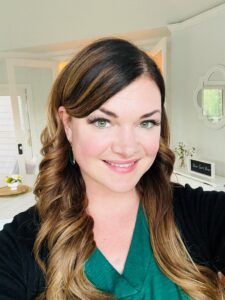
The following is a conversation with Dr. Kimberly Cronsell, Acting Chief Medical Information Officer at Children’s Wisconsin, about the system’s experience transitioning to its Digital Care platform.
Children’s Wisconsin has made a transition from manually printing and distributing much of its patient education content to creating a digitized library on its Digital Care platform. It seems like this has transformed both the clinical and patient experience. Can you tell us a little more about what drove the decision to make this change?
Dr. Kimberly Cronsell: We didn’t have a real way to wrap our hands around what content was being distributed when or where – and it wasn’t standardized across areas.
We have a lot of experts here who create specific education on a given topic for their patient population. So, we had thousands of custom teaching sheets created and maintained by our providers – and we would have situations where the right hand didn’t really know what the left hand was doing. If you went to urgent care, you might get one type of education on a certain condition that would be different than if you saw your primary care or emergency care provider.
We really wanted to find a way to make this education more equitable, so that families could refer back to it, share it with other caregivers, and so that we could have a centralized repository of where the content was being stored.
We had a strong desire to deliver this digitally, because we would so often walk into rooms and see that our handouts were just laying on the table or in the trash and we had no way to know any reporting or analytics on any of our patient education.
So we made this really bold move to pivot all of our patient education to our Digital Care platform by the end of 2024. And we didn’t make it – but we did make it by the end of 2025!
Now that you’ve made this transition, how has this change benefited the patient and family experience?
Cronsell: We didn’t have a way to get pre-visit information to families consistently – especially families that don’t have MyChart. We had to rely on care teams saving attachments and then emailing them to families– and doing a ton of workarounds to get families information to help them prepare for visits.
Now, we have an easier way that we can send that information to families in a consistent way, so everyone has the same experience.
With Digital Care, education is distributed automatically in some cases. In others, clinical teams can easily access a tab in the EHR to distribute content.
The data now speaks for itself. We’ve seen that 95% of our families are directly accessing the education that we send them through a direct access link. We counted that, before Digital Care, families were required to perform 11 clicks before accessing patient education digitally. It was just too hard – and buried.
It’s been really impactful in a number of areas. We’ve also seen incredibly strong engagement among our Spanish-speaking community of patients. We have hundreds of use cases – and every single one – the Spanish engagement is higher.
The other side of all of this is the clinician experience. How has this change impacted them?
Cronsell: We have found that any ways we can automate or embed these resources within workflows, the more successful they have been.
Digital Care is always in the same place, and for our care teams, they know exactly where to go to get the information. Everybody can find it – and we’ve been magically able to spread enough awareness about it that everyone knows about it.
It sounds like there’s a strong appetite internally for a lot more use cases to be deployed from across the system?
Cronsell: We have a waiting list!
Are there any particular use cases that really stand out to you in terms of the difference it has made at the patient level?
Cronsell: For us, what really stands out is our ability to send the right education at the right time. We spent a lot of time talking with our families and asking them when they want to hear from us – and they told us they want the information when they’re getting ready for a visit or procedure. The ability for us to send information before a visit or procedure has dramatically changed the whole care interaction – it starts before you even come and see us.
We had an initiative where we send education before patients get MRIs, because kids have to be sedated, so they have to avoid food and drink by midnight the night before. If they don’t do that, and they show up, their MRI gets canceled. That’s a four-hour block of anesthesia, recovery, etc., that all gets wasted. And we started sending this education before MRI, and we saw a 42% increase in readiness.
An analysis of 7,000 patients who were sent this material found that just 11 kids were not properly fasted after Children’s Wisconsin began its initiative on this.
We’re also seeing similar trends in primary care with well-child pages – we’re able to answer a lot of questions ahead of time. Like, “Am I going to get a finger poke, or am I got to get an immunization?”
Being able to share that with families – that’s decreasing phone calls and MyChart messages. It’s also helping kids be more prepared and we’re seeing families show up more willing and ready to get vaccinated and stay on schedule.
It’s truly transformational in the impact it can have. So it’s really cool to see solutions that holistically solve problems, rather than just pieces.
Let’s dive into a few other initiatives – I know that your system deployed some educational materials from the National Center on Shaken Baby Syndrome (NCSBS) to inform new parents on normal infant crying in an effort to prevent Shaken Baby Syndrome through an initiative known as the Period of PURPLE Crying. Can you tell me more about that project and what sort of results you saw and how those compare to what you saw previously?
Cronsell: Normal infants will cry up to three hours a day for really no reason. It peaks around 5-6 weeks old. That’s normal – and they cry so much that they literally turn purple and that’s what’s called the “Period of PURPLE Crying.” This initiative was an effort to educate families that this is a normal developmental milestone.
This is education that pediatric institutions or anyone that takes care of infants is supposed to provide to mothers before they are discharged (or at other newborn-related visits). This is a compliance measure that we are tracked on.
Previously, we provided a booklet that – I kid you not – had a 16-digit code that you would have to manually enter in an app in order to access the content. Compliance was very low – and it was very hard for us to track utilization.
We were able to work with this foundation (NCSBS) to create a digital access code where we can now track which of our families are accessing the education, and we’re not wasting booklets and resources.
But we’re also able to automate delivery, so in primary care, we can automatically send this information and if we can see you didn’t open it, we can nudge. So, at five weeks, we’ll send families a nudge – and that’s just at the right time that we’re sending you the right information. Instead of saying, “Here is a binder of information on your baby, good luck!” we will send a message that says, “Reminder – now is the time your baby may be crying more – here is a link to resources that can help.”
So, what we saw when we turned this on was 86% compliance, which is the highest compliance we’ve ever seen in this education. We also saw that 99% of families that engaged with the content avoided urgent care, the emergency department, or inpatient for having an incident of a non-accidental trauma or shaken baby.
My understanding is you also have an initiative to prepare families who have a Type 1 Diabetes patient with education to support families with a new diagnosis ahead of teaching visits. Can you tell me more about the objective with that project and how it has gone?
Cronsell: In pediatrics, when you first diagnose a child with diabetes, you’re telling them about a lifelong chronic condition. That’s very overwhelming for families – and so they’re trying to wrap their heads around the fact that their child now has something they’re going to have to manage forever.
The legacy way of doing this was to give them a huge binder and have them come in for all-day teachings – multiple sessions in a row (to learn about the condition and what to expect).
What we did here was we made the binder digital and broke it into smaller pieces of content. So now, we’re able to send that to a family right after they’ve been diagnosed, before they go to their first day of in-person teaching to get familiar with the content.
What our diabetes team has told us is that families are now asking better questions. Sending this out ahead of the teachings also allows the diabetes team to dive deeper on the content, so the time spent teaching is now much more valuable for families too.
This is the first time we’re seeing a dramatic improvement. We’re seeing now that, by and large, these kids are not missing appointments, they’re not going to the emergency department, they’re not getting readmitted for low or high blood sugars, they’re more compliant with their regimens, and ultimately their hemoglobin A1C is dropping faster.
So it’s pretty amazing – that the education impacts clinical outcomes.
You all have some really promising proof points on the benefits of this program. Where do you want to take it from here?
Cronsell: I want more third-party solutions. They have been amazing for us – to just keep everything in Digital Care.
I would also like to find ways to make Digital Care easier and faster for care teams to utilize. Any way that we can continue to enhance the platform to work more efficiently for staff is going to continue to drive adoption.
Have you heard from other systems that have seen this and want to adopt something similar?
Cronsell: We’ve definitely had other pediatric healthcare systems ask us about our approach to patient education, because no one has really figured it out yet. So we do talk quite often to other healthcare systems about how we’re using this for patient education.
Is there anything else I haven’t asked you about, that you wanted to make sure we cover?
Cronsell: This (Digital Care) has allowed us to share educational content with patients in between healthcare systems. So, we have NICU babies who are admitted to other outside healthcare organizations, and they do our patient education through Xealth, so it’s been interoperable in a way that we have never had access to.